

Department of Сhemistry |  Main / Faculties / Faculty of Natural Sciences and Geography / Departments / Department of Сhemistry / News Main / Faculties / Faculty of Natural Sciences and Geography / Departments / Department of Сhemistry / News
31.01.2026
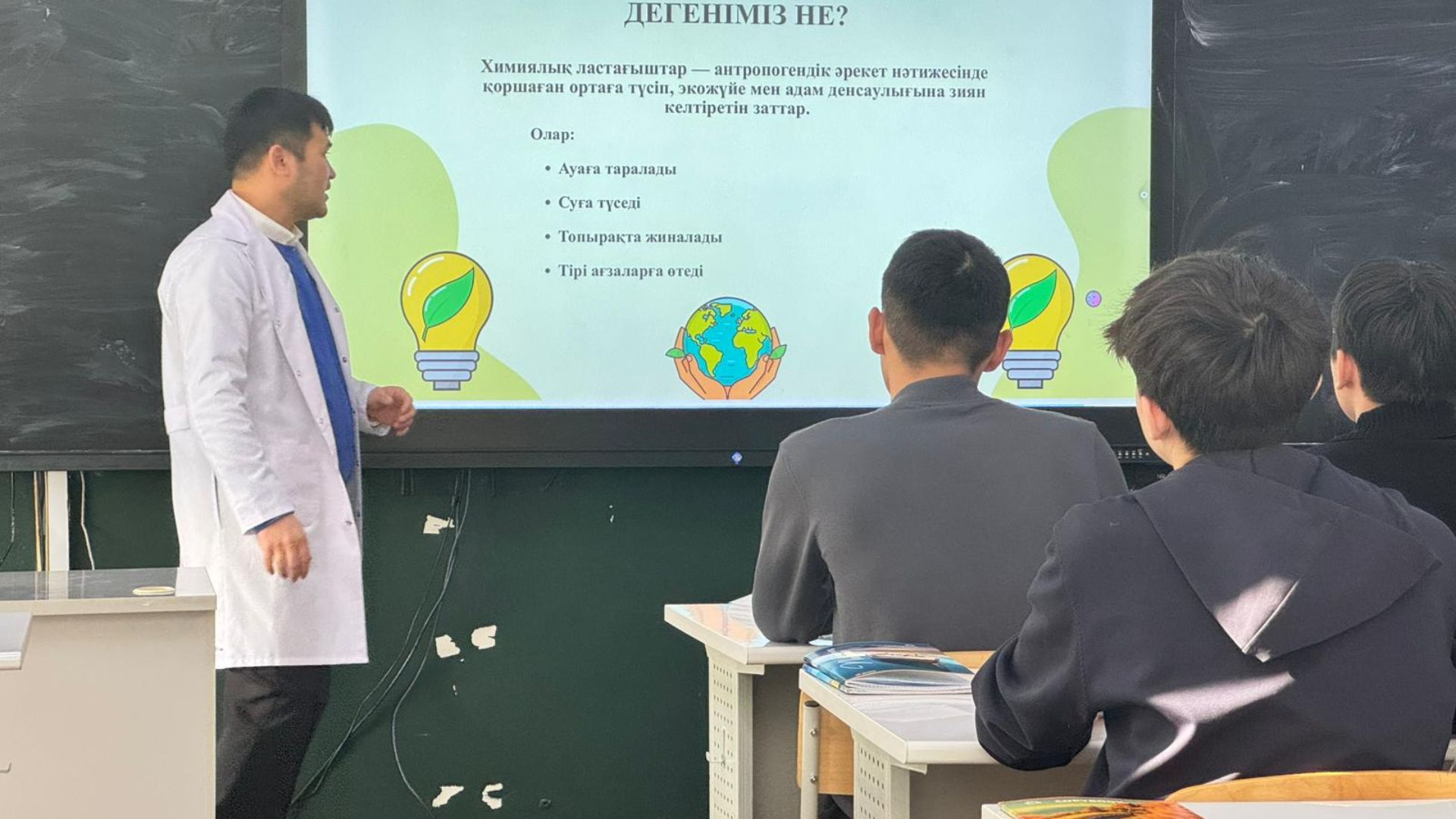
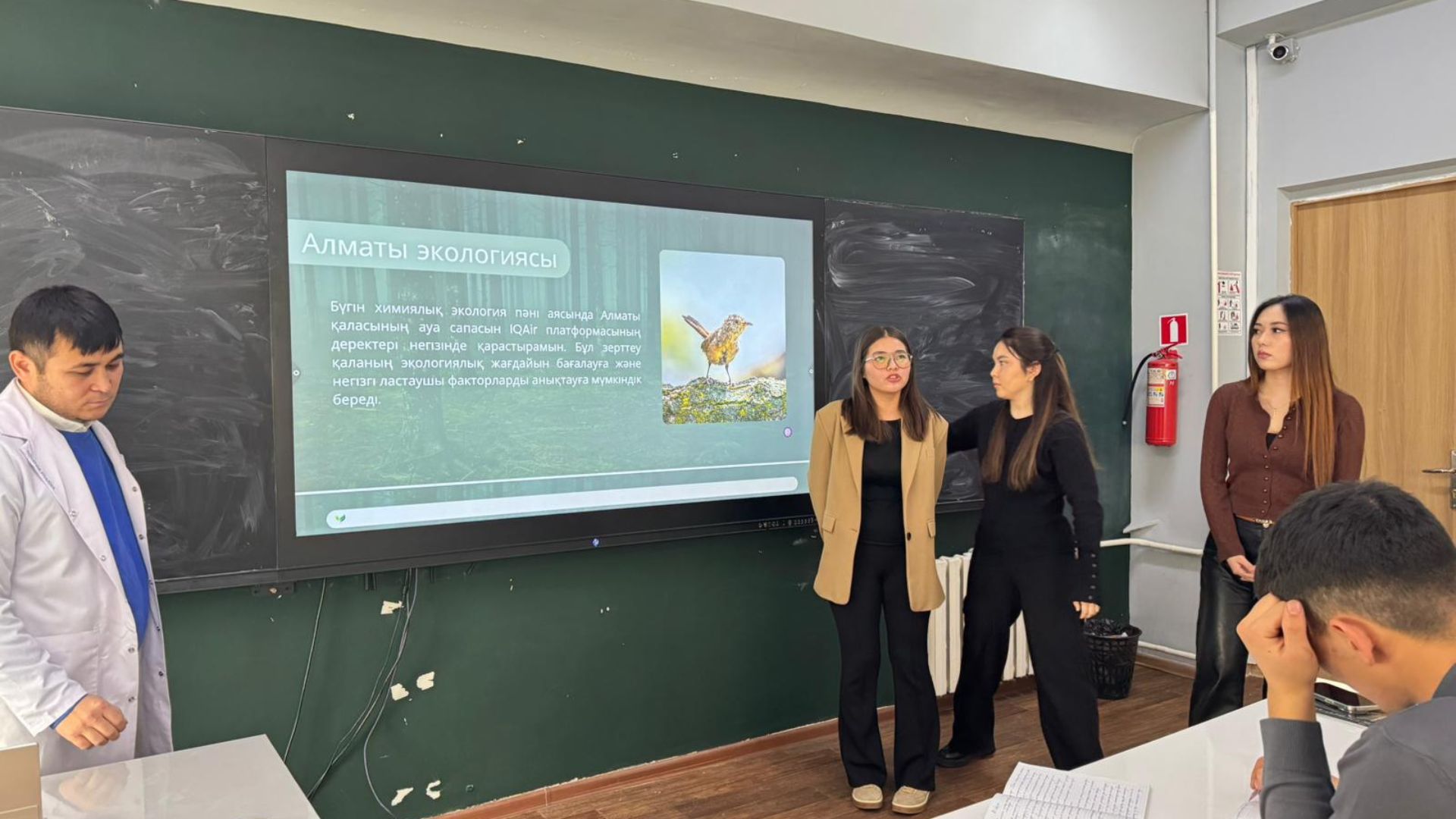
A lecture on the topic "Distribution of Chemical Pollutants in the Environment" was held in the subject "Chemical Ecology" On January 30, 2026, a lecture on the topic “Distribution of Chemical Pollutants in the Environment” was delivered to third-year students of the 6B01510 – Chemistry educational program within the course Chemical Ecology.
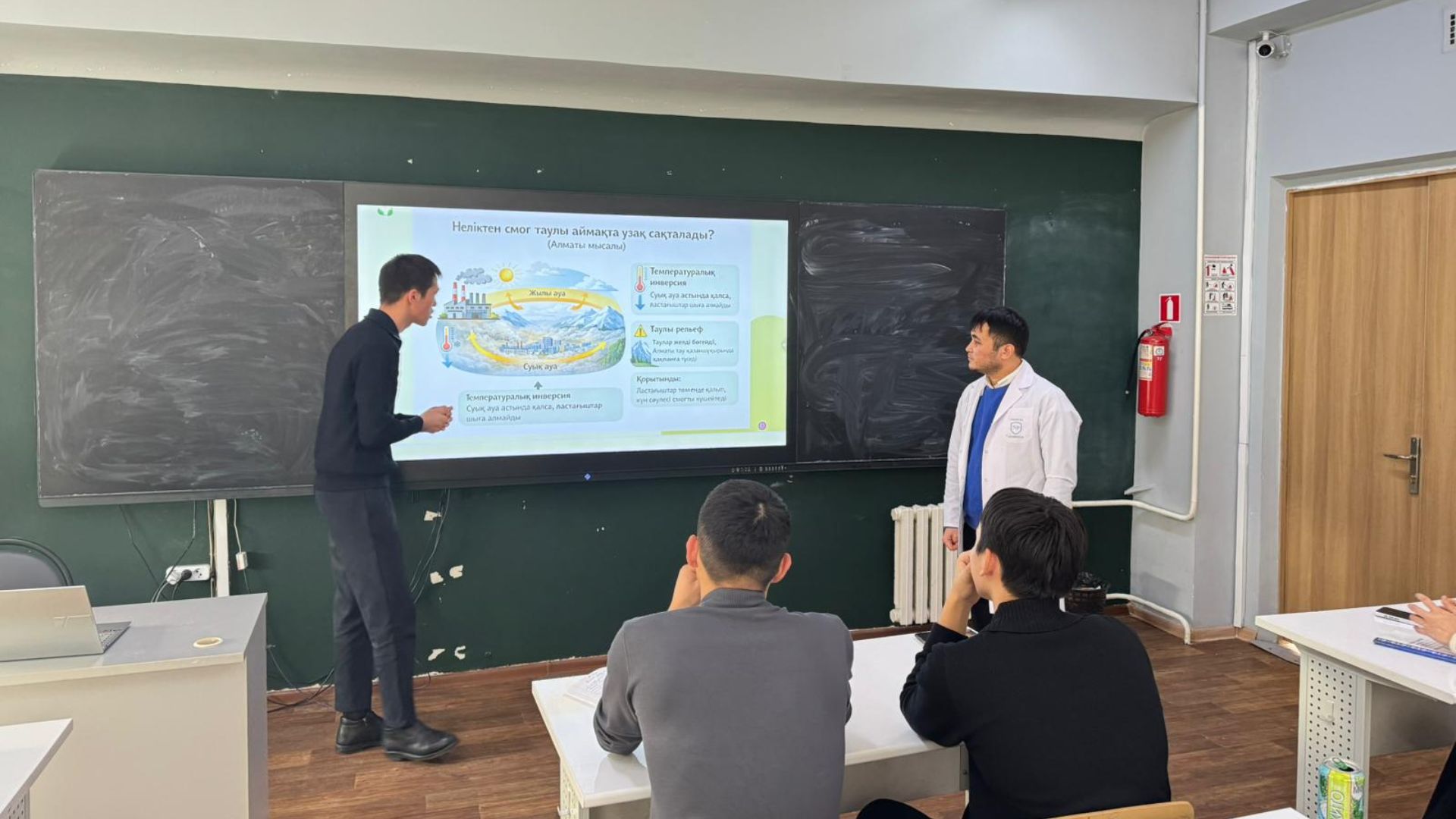
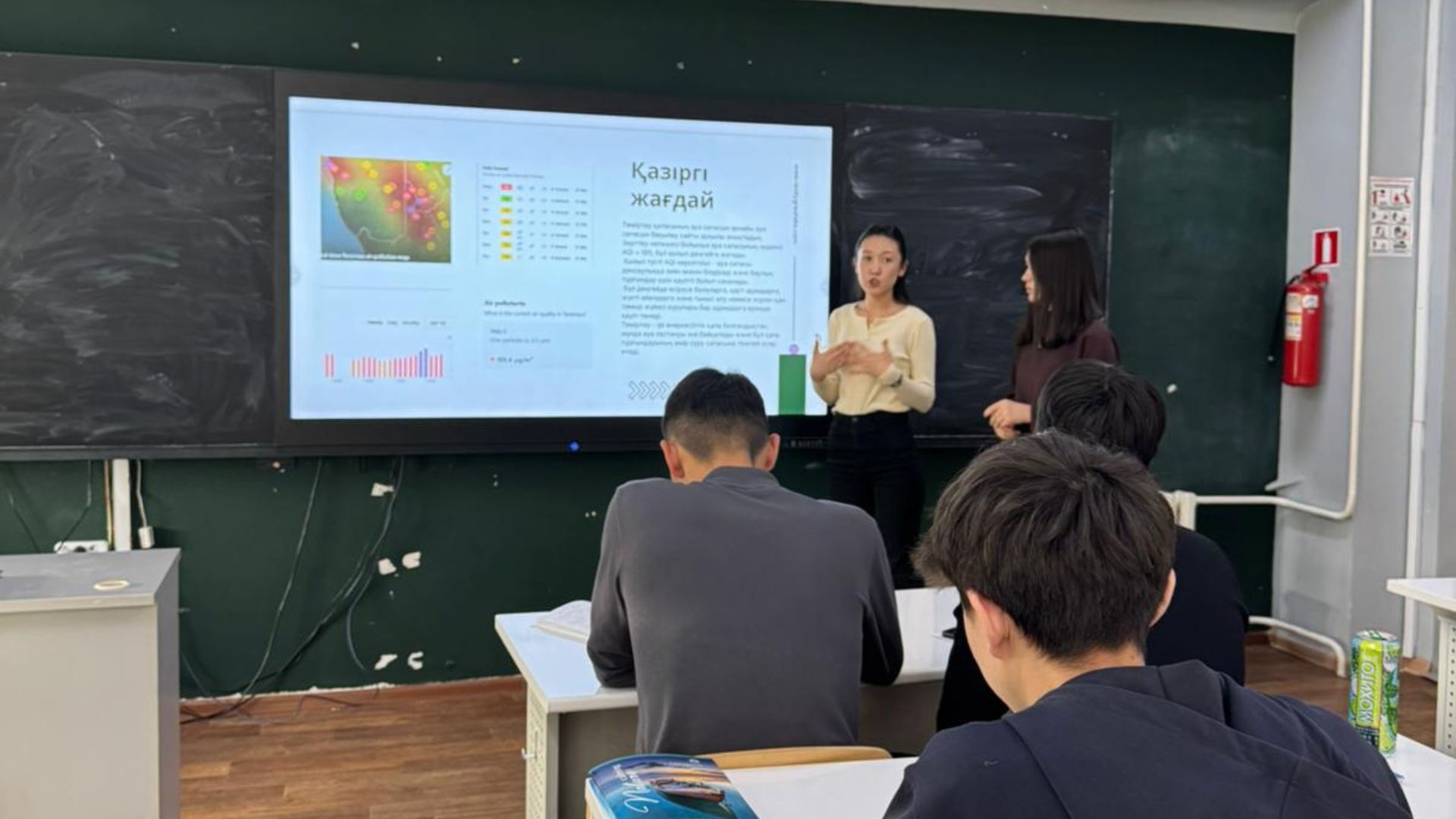
The main objective of the session was to develop students` deep understanding of the mechanisms by which chemical pollutants spread in the environment, to build their ability to work with AQI data, and to enable them to represent chemical processes in the form of a visual map. The content of the lesson was structured in accordance with the TPACK model, ensuring the integration of subject knowledge, teaching methodology, and digital technologies. The lecture was conducted by second-year doctoral student Bekbolat Ibashov as part of his dissertation research. The class was organized in a flipped learning format, with particular emphasis placed on students` prior preparation. For this purpose, the course instructor, Candidate of Chemical Sciences and Associate Professor Zhazira Mukatayeva, ensured effective use of video materials for distance learning available on the university`s educational platform. During the lesson, to increase student engagement, the IQAir map was displayed on the screen, and a comparison of air quality indicators in the cities of Almaty, Temirtau, and Ust-Kamenogorsk was carried out. The discussion was centered around the problem-based question: “Why is the AQI high in these cities?” In addition, short video fragments illustrating smog in Almaty and metallurgical pollution in Temirtau were shown, allowing students to connect environmental issues with real-life examples. In the chemical explanation, the processes of acid rain formation resulting from the interaction of sulfur dioxide with water, the formation of smog from nitrogen oxides under the influence of sunlight, and the phenomenon of heavy metal bioaccumulation were clearly demonstrated. These processes were presented through diagrams and correlated with the data shown on the IQAir map. To summarize the lesson, a “Pollutant Road Map” was introduced — a visual model developed by the lecturer. Based on this model, students discussed how pollutants move through the environment and how they affect ecosystems and human health, thereby consolidating their knowledge. At the end of the session, each group presented their work and exchanged views on the stages at which the spread of pollutants could be prevented. As a result, students learned to analyze AQI indicators, understood the complete pathway of chemical pollutant distribution, and were able to connect chemical science with current environmental issues.
Вернутся назад |












|
050010, Republic of Kazakhstan Almaty, Dostyk аve., 13
e-mail: rector@abaiuniversity.edu.kz

|
|
Office: 8 (727) 390 60 05
Admissions Office/Call center: 8 (727) 390 60 04 8 (700) 390 60 04
8 (727) 291 57 68
Сitizen reception on personal matters
|
 Version for visually impaired persons